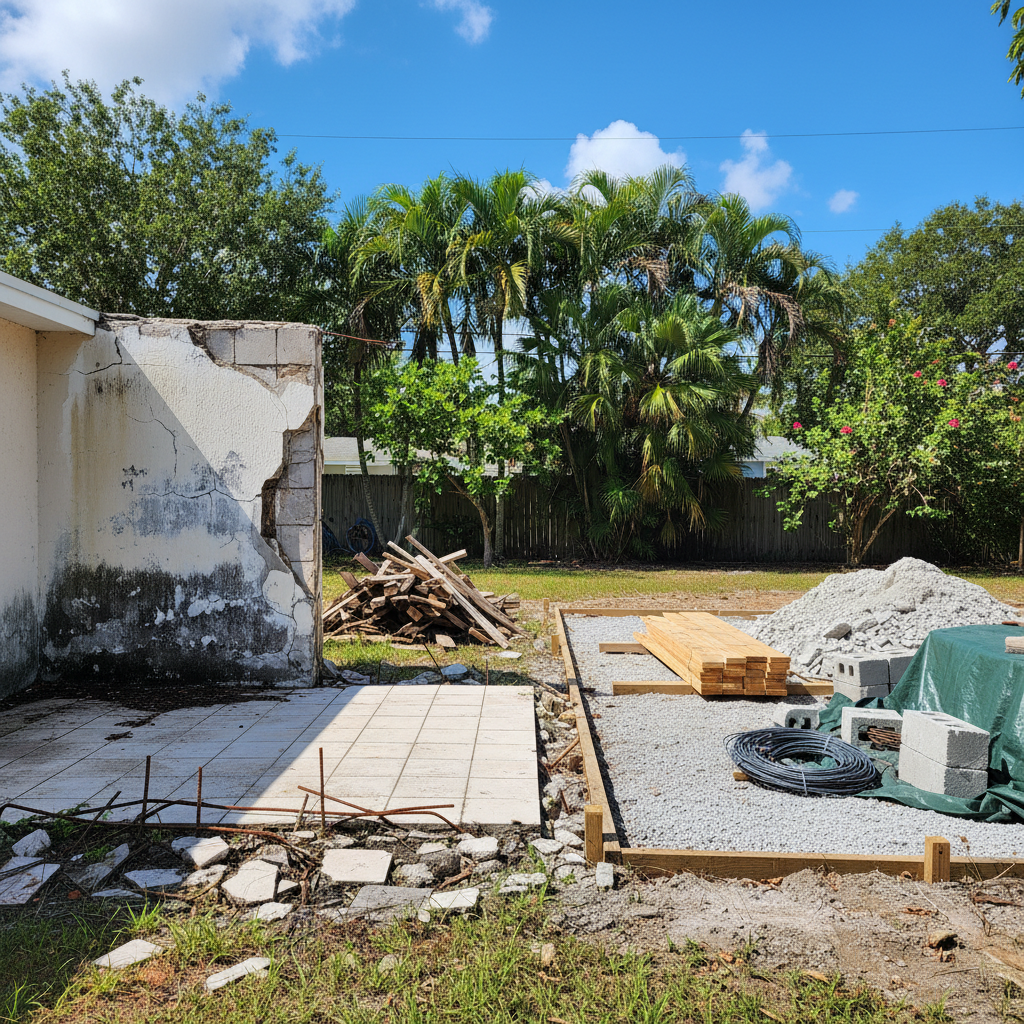
So, you've got a part of your house that's definitely seen better days. Maybe it's a damaged lanai, an addition that's falling apart, or a wall that just isn't structurally sound anymore. You're thinking about partial demolition, and a big question pops up: should you try to fix what's there, or just rip it out and replace it? It's a common dilemma for homeowners right here in Cape Coral, and honestly, there's no single right answer for everyone. But I can tell you what I've seen over the years, and what usually makes the most sense.
Repairing a Damaged Section
Let's talk about trying to fix what's broken. On the surface, this often looks like the cheaper, less disruptive option, doesn't it? You're just patching things up, not tearing down an entire wall. For minor issues, like a small bit of rotted wood in a non-load-bearing wall, or some cosmetic damage, repair can absolutely be the way to go. You might save some money upfront on materials and labor, and it typically takes less time than a full tear-out.
However, you've really got to be careful. Here in Southwest Florida, especially with our humidity and those occasional heavy rains, what looks like a small problem can sometimes be a symptom of something much bigger. I've seen plenty of times where a homeowner tries to repair a section of a wall, only to find out there's extensive mold or termite damage hidden behind the drywall. If you don't tackle the root cause, you'll be repairing it again in a few years, and you'll have just wasted that initial investment.
Cost & Durability of Repairs
- Cost: Generally lower upfront. You're buying fewer materials and paying for less labor hours for the demolition part, after all.
- Durability: This is where it gets tricky. If the underlying issue is completely resolved and the repair is done right, it can be durable. But if you're just patching over a bigger problem, it won't last.
- Maintenance: Depends on the repair itself. A good repair shouldn't need more maintenance than the original structure. A bad one, though? That'll be a headache.
- Appearance: Can be seamless if a skilled craftsman does the work, but sometimes a repaired section will always look a little 'patched' if the materials don't match perfectly, or if the original structure was compromised.
Replacing a Damaged Section
Now, let's think about tearing out the damaged part and replacing it entirely. This is often what we recommend at Paradise Demolition when the damage is significant, structural, or widespread. It might seem like a bigger job, and usually it is, but it gives you a clean slate. You get to remove all the compromised materials – whether it's water-damaged drywall, termite-ridden studs, or a foundation issue – and build back with new, sound materials.
Think about the soil conditions we have here in Cape Coral, especially in some of the older sections with fill dirt. If you have a foundation issue causing cracks in a wall, just repairing the wall without fixing the foundation is like putting a band-aid on a broken leg. A full replacement lets you properly address those underlying structural problems. It also gives you an opportunity to upgrade. Maybe you want to improve insulation, update wiring, or even change the layout slightly. When you replace, you're not just fixing; you're often improving things.
Cost & Durability of Replacements
- Cost: Higher upfront. You're paying for more demolition, more new materials, and often more construction labor.
- Durability: Excellent. You're building with new, sound materials, often to current building codes, which means it should last for a very long time.
- Maintenance: Typically lower. New components are less likely to fail or need attention than repaired, older ones.
- Appearance: Can be perfectly integrated or even an improvement. You're building new, so you have control over the finish and can make sure it matches or upgrades the existing structure.
My Recommendation for Cape Coral Homeowners
For most significant partial demolition projects in Cape Coral, especially those involving structural components, water damage, or pest infestation, I'm going to lean towards replacement. It's usually the more robust, long-term solution. While the initial cost is higher, you're investing in true durability and, well, just plain not having to worry about it. You won't be wondering if that old problem is going to resurface next hurricane season or if termites are still lurking. You'll know it's gone and replaced with something solid.
Of course, every situation is unique. That's why getting a professional assessment is crucial. We can come out, take a look at the damage, and give you an honest opinion on whether a repair is truly viable or if replacement is the smarter move for your home and your wallet in the long run. Don't just slap a patch on it if the problem goes deeper. You'll thank yourself later, believe me.